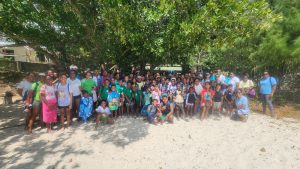
A week of activities to commemorate World Wetlands Day has concluded on Curieuse Island, bringing together almost over 100 participants from different age groups and different schools in a celebration of wetlands and exchange of traditional knowledge.
This year’s celebration of World Wetlands Day was held under the theme: ‘Wetlands and Traditional Knowledge: Celebrating Cultural Heritage.’
“This theme emphasizes the vital role of wetlands in sustaining ecosystems and communities,” stated Mr. Jean-Claude Labrosse, the Principal Climate Adaptation Officer, Department of Energy & Climate Affairs, in the Ministry of Environment, Climate, Energy and Natural Resources.
Seychelles has been celebrating World Wetlands day since 2005 as a co-signatory of the Ramsar convention. Three wetlands area have also been designated as Ramsar sites, namely, Port Launay wetlands in 2004, and Mare Aux Cochons wetlands and Aldabra coastal Wetlands in 2010.
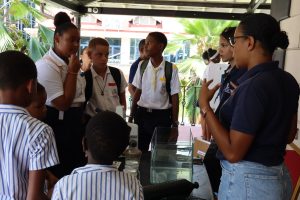
These sites, as well as other wetlands, were highlighted of the first day of activities during a forum held at the National History Museum. This event had a strong involvement of elderly community members, whose traditional knowledge and lived experiences enriched the learning process. Participants shared stories, practices, and observations passed down through generations, offering valuable insights into how wetlands were used, respected, and protected in the past. Following the forum, an exhibition by NGOs and government entities showcased practical approaches to wetland protection.
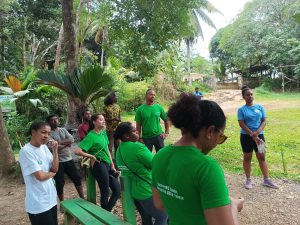
As one of the most popular local wetland attraction sites, Dan Sours was an ideal location for hands-on activities. Under the watchful eyes of the Baie Lazare Watershed Committee, which oversees and promotes the conservation, restoration and sustainable use of that wetland area, staff of the Ministry and volunteers from the Seychelles Ports authority removed invasive species and plant fruit trees around the water basin. Sightings of moorhens and snakes were particularly exciting for first-time visitors to the site.
Schoolchildren also played a key role throughout the week, actively engaging in hands-on learning activities and discussions. At Anse Boileau Secondary School, efforts to improve the wetland near the school gained momentum. Nearly 30 students from secondary and primary schools, along with elderly participants and other community members, took part in the activity.
The Climate Department also collaborated with Air Seychelles, which has previously adopted the Anse Boileau Home for the Elderly. At the home, residents observed as the team cleaned drainage areas and the garden. New fruit trees were planted within the compound, and during lunch, residents and participants exchanged stories about wetlands in the area, reinforcing the importance of preserving both natural ecosystems and cultural heritage.
The closing event on Curieuse Island served as both a symbolic and practical reminder of the importance of wetlands. Participants explored the island’s unique mangroves and coastal ecosystems. Schoolchildren, teachers, and ministry staff took part in various activities, including a crash course led by the Biodiversity and Conservation Division on tortoise monitoring, such as recording height and distinguishing between sexes.
Staff from the Seychelles Parks and Gardens Authority (SPGA) assisted in organizing a beach profiling activity and a beach clean-up. Participants also enjoyed a scenic walk to Anse José, stopping along the way to learn about different mangrove species. They were provided with fact sheets to record their observations. Midway through the walk, the group planted several Poision Fish Tree or ‘Bonnen Kare’ (Barringtonia asiatica), a native species well suited to coastal environments. Participants also observed the effects of harsh dry weather on the mangroves, many of which had died.
Speaking to the media after the activities, Ms. Shirley Jourbert said the Ministry aimed to take a different approach this year. “We wanted to educate participants while also giving them hands-on experience in observing mangroves and tree planting.”
Organisers described the week-long commemoration as a success, citing strong participation and positive intergenerational engagement. The activities reinforced the message that protecting wetlands is not only an environmental responsibility but also a shared social and cultural commitment.